
When planning a kitchen remodel, layout is just as important as style. Cabinets, countertops, and finishes may define the look of your kitchen, but the layout determines how the space actually functions. One design principle that has stood the test of time is the Kitchen Triangle Rule. While kitchen trends continue to evolve, this concept remains one of the most reliable guides for creating a kitchen that works efficiently for everyday living.
At Schlick Construction, we help homeowners across Omaha, Nebraska design kitchens that balance beauty, comfort, and functionality. Understanding the kitchen triangle is one of the best places to begin when planning a kitchen renovation
What Is the Kitchen Triangle Rule?
The kitchen triangle refers to the relationship between the three primary work areas in a kitchen:
The Sink – where food preparation and cleaning happen.
The Stove or Range – the main cooking area.
The Refrigerator – where ingredients and food are stored.
These three areas form a triangle that guides movement while cooking. The sink, stove, and refrigerator should be close enough for efficiency, but far enough apart to prevent congestion.
When designed properly, the kitchen triangle:
- Reduces unnecessary steps while cooking.
- Improves kitchen workflow.
- Keeps work areas organized.
Makes the kitchen feel more natural and intuitive to use.
Ideal Kitchen Triangle Measurements
To function effectively, the triangle should follow some general design guidelines.
- Each side of the triangle should typically measure between 4 and 9 feet.
- The total distance of all three sides should be between 13 and 26 feet.
- Major obstacles such as cabinets or islands should not block the triangle.
- Work zones should remain clear and accessible.
These guidelines help balance efficiency and space, ensuring that the kitchen does not feel cramped or inefficient.
Common Kitchen Layouts and the Triangle Rule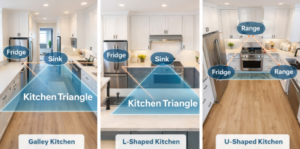
Different kitchen layouts use the triangle in different ways. A well-designed kitchen adapts the concept to fit the available space.
L-Shaped Kitchens
L-shaped kitchens naturally support the triangle layout and work well in both small and large homes. Appliances are typically positioned along two adjacent walls, allowing for efficient movement between work zones.
U-Shaped Kitchens
U-shaped kitchens often create one of the most effective triangle layouts. With appliances spread across three walls, the work areas remain clearly separated while still maintaining easy access.
Kitchens with Islands
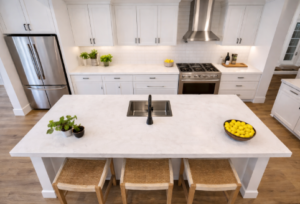
Modern kitchens often include an island for additional prep space, seating, or storage. In these layouts, the triangle may shift slightly, but maintaining clear pathways around the island is essential for preserving good workflow.
Galley Kitchens
Galley kitchens feature two parallel walls with appliances placed along each side. While the triangle may be tighter in this layout, careful planning can still maintain efficiency.
Why Professional Kitchen Planning Matters
A kitchen remodel involves far more than choosing cabinets and countertops. Layout decisions affect many aspects of the home, including:
- Electrical placement
- Plumbing locations
- Appliance efficiency
- Kitchen safety and accessibility
- Long-term usability of the space
Conclusion
The kitchen triangle remains one of the most effective principles in kitchen design because it focuses on how people actually move and work in the space. By thoughtfully positioning the sink, stove, and refrigerator, homeowners can create a kitchen that feels efficient, comfortable, and easy to use every day. While modern kitchens may include islands and additional work zones, the core idea of the triangle still helps guide smart layout decisions. When planning a kitchen remodel, keeping this principle in mind can make a big difference in both functionality and overall experience.